

Foreword
This is a practical SEMrush guide I compiled during my SEO learning journey. As a world-class SEO analysis toolkit, SEMrush offers powerful features but often presents a steep learning curve. Through hands-on testing and real-world application, I've distilled the most practical functions and techniques to help newcomers quickly master this robust platform.
This guide will build your complete SEO analysis framework, starting with domain analysis and progressively diving into core areas like keyword research, competitor analysis, and link building.

Domain Overview: Understanding Your Site's Fundamentals

In SEO, the domain overview provides a snapshot of a website's key health metrics. Simply enter the domain you want to analyze.
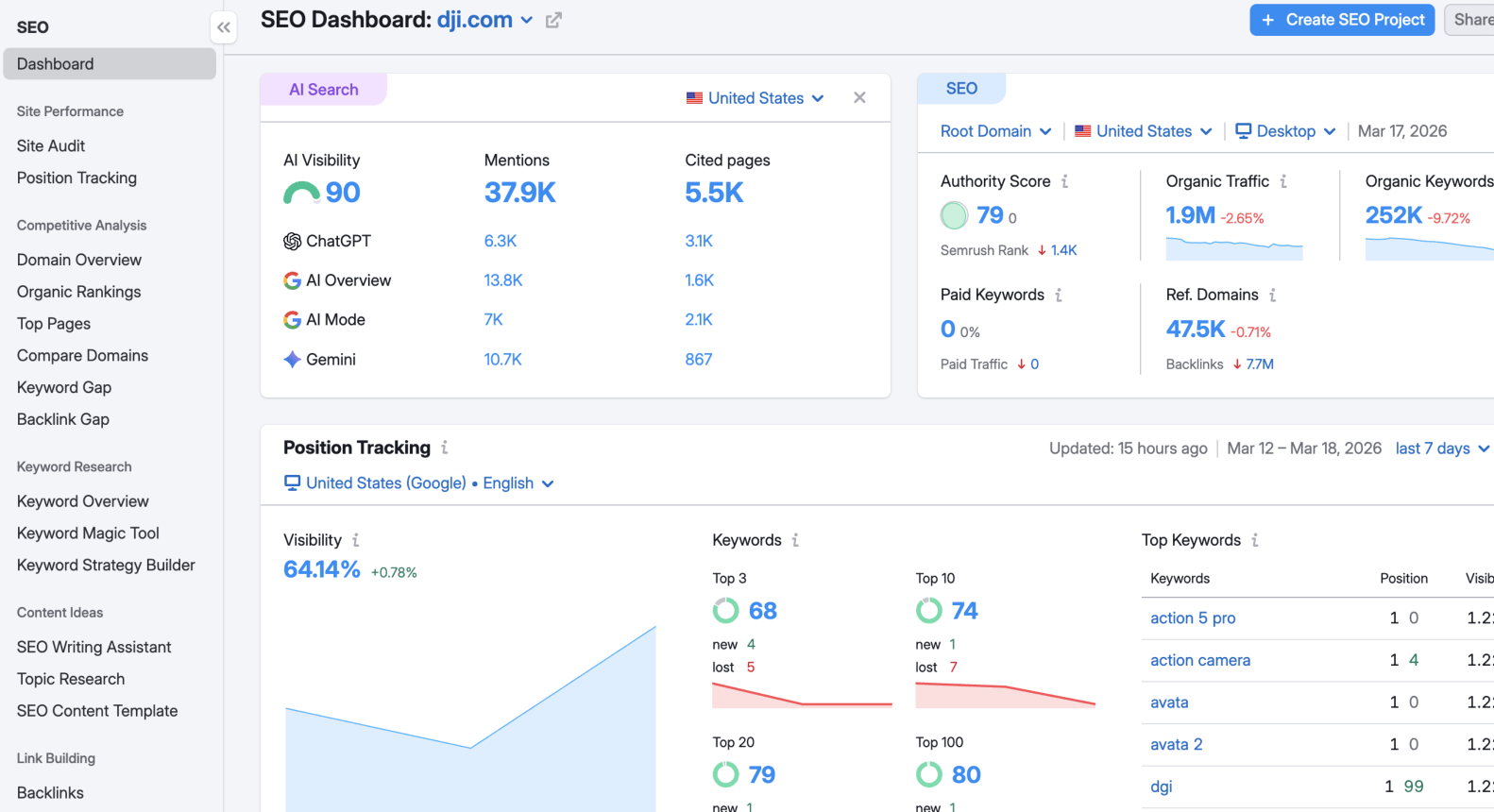
Key metrics include:
Domain Authority Score:A measure of the website's overall SEO health and ranking potential.Organic Search Traffic:Estimated monthly visits coming from search engines.Total Backlinks:The total number of external links pointing to the site.
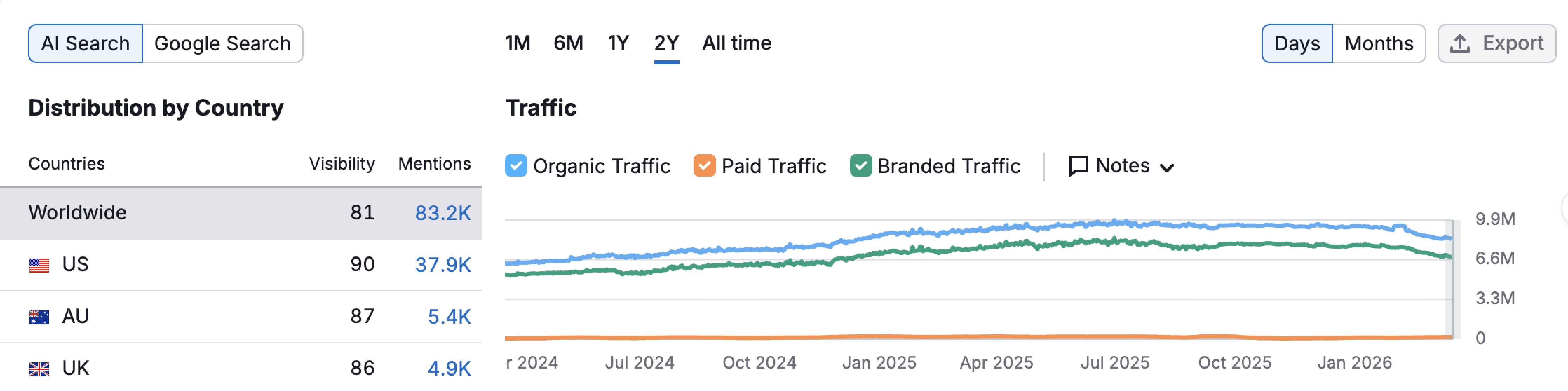
The left side typically shows the main traffic sources, while the right side displays traffic trends over time.
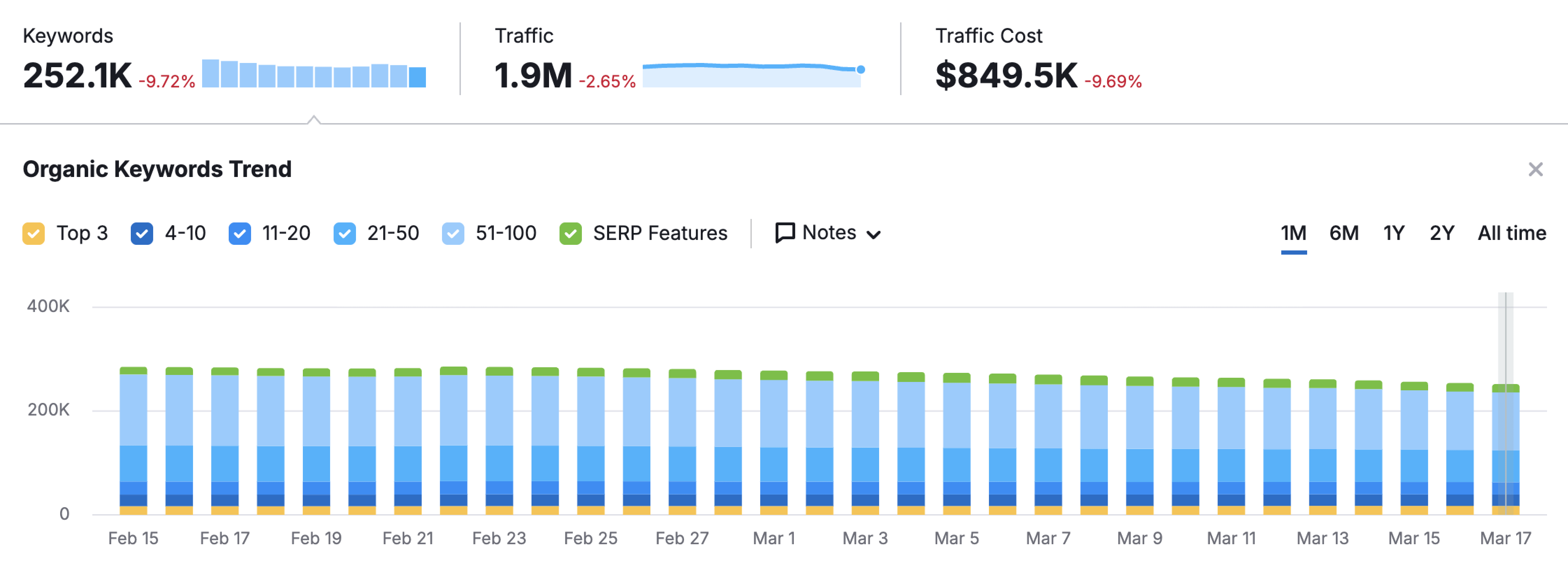
Below that, you'll find the primary keywords driving traffic and their respective rankings. For instance, a site might rank number one for several key search terms.
This section also reveals search intent, which generally falls into four categories:
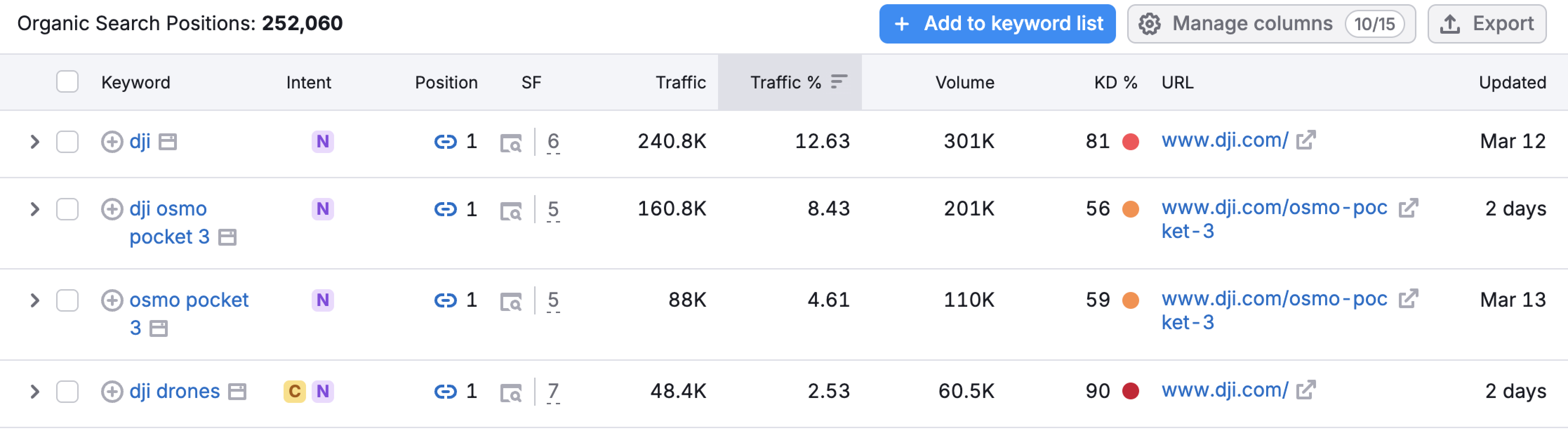
Informational:The user is in the discovery phase, seeking knowledge (e.g., "what are the benefits of coconut water").Commercial:The user is in the evaluation phase, researching options before a purchase (e.g., "best coconut water brands").Transactional:The user is in the decision phase, ready to take action (e.g., "buy coconut water online near me").Navigational:The user is searching for a specific website.
By aligning your content with the user's journey stage for each keyword, you can attract the right audience at the right time and guide them toward conversion.
Identifying Your Competitors
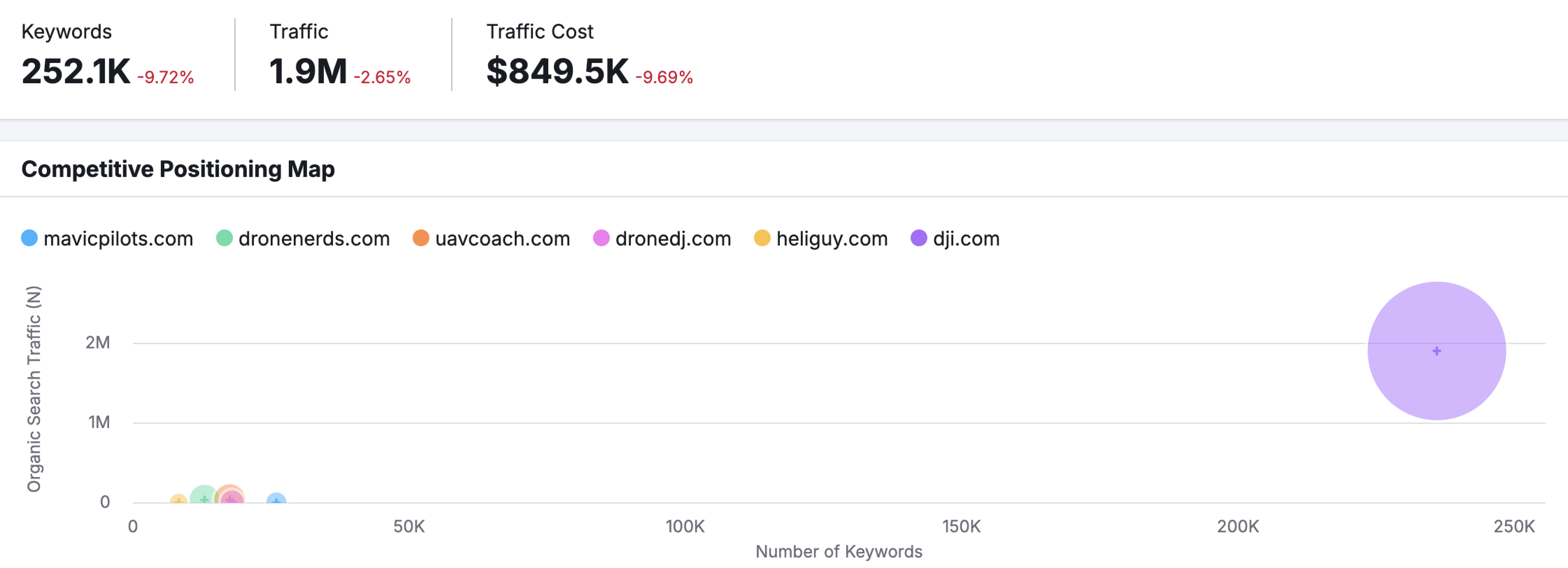
This section visualizes your competitive landscape. On the left, you'll see keywords you share with competitors. On the right, a graph plots competitors based on their estimated traffic (vertical axis) versus the number of keywords they rank for (horizontal axis).
Keyword Gap Analysis
Once you've identified your main competitors, you can uncover the keywords driving their traffic.
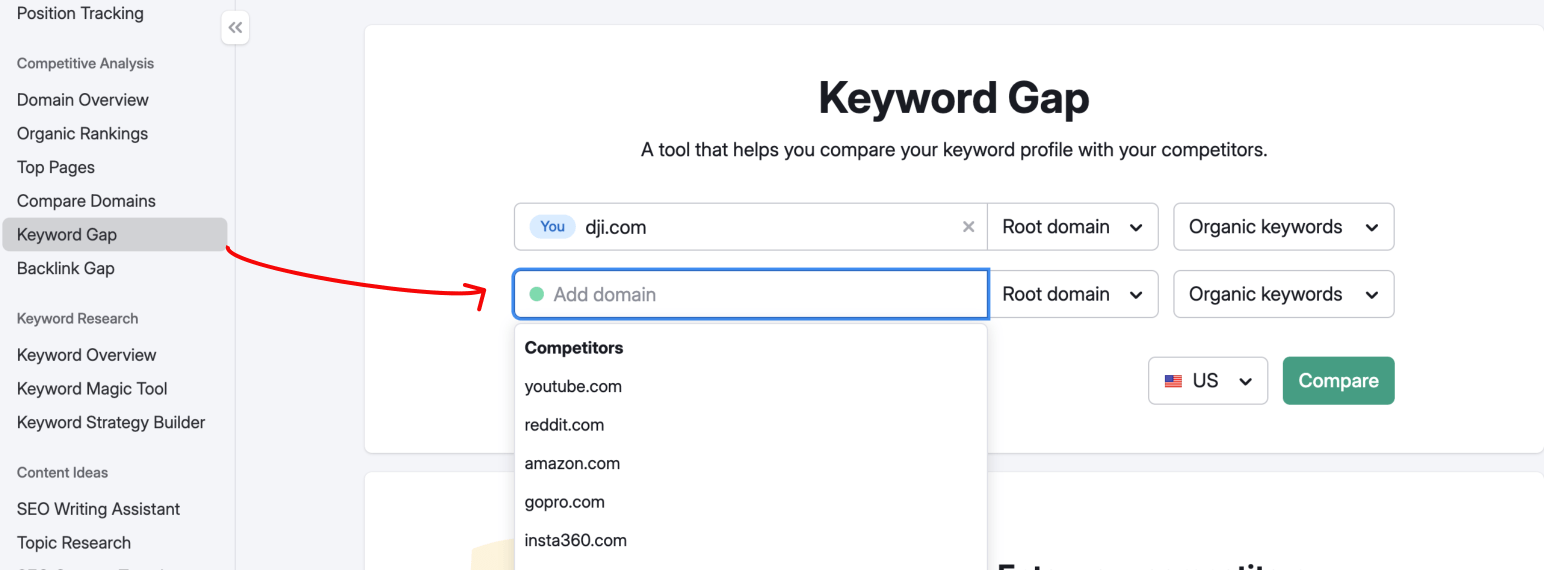
Select "Keyword Gap" in the left menu and add your domain. SEMrush will suggest competitors automatically. However, for smaller sites with limited keyword data, the tool's suggestions might not be perfectly accurate. In this case, you can manually enter the competitor domains you want to analyze.
The tool generates a detailed keyword report, often sorted by search volume, highlighting a list of "missing" keywords—terms your competitors rank for that you don't.
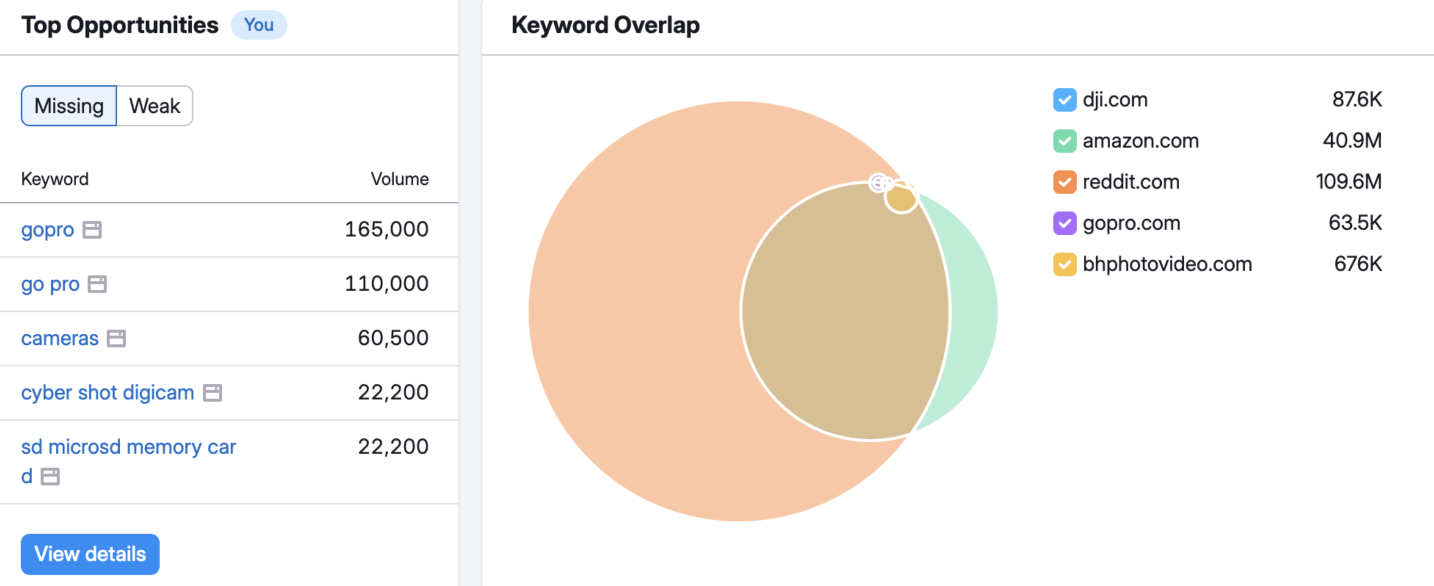
The detailed view provides crucial information for each keyword:
- Ranking position of the competitor's site.
- Keyword Search Volume: How many times it's searched per month.
- Keyword Difficulty (KD%): An estimate of how hard it is to rank for organically.
- CPC (Cost-Per-Click): The average price advertisers pay for a single click on this keyword in paid search.
- Competition (Com.): A relative metric (e.g., 0 to 1) indicating the level of competition in paid search.
- Results (RES): The total number of URLs indexed by search engines for that keyword.
With this data, you can prioritize optimization efforts, focusing first on high-volume, low-difficulty keywords to efficiently fill the gaps in your own site's keyword profile.
Keyword Magic Tool: Crafting a Unique Keyword Strategy
While competitor keywords are a great starting point, building a unique strategy is key to driving significant, original traffic. The Keyword Magic Tool helps you discover hundreds of new keyword ideas, filterable by search intent.
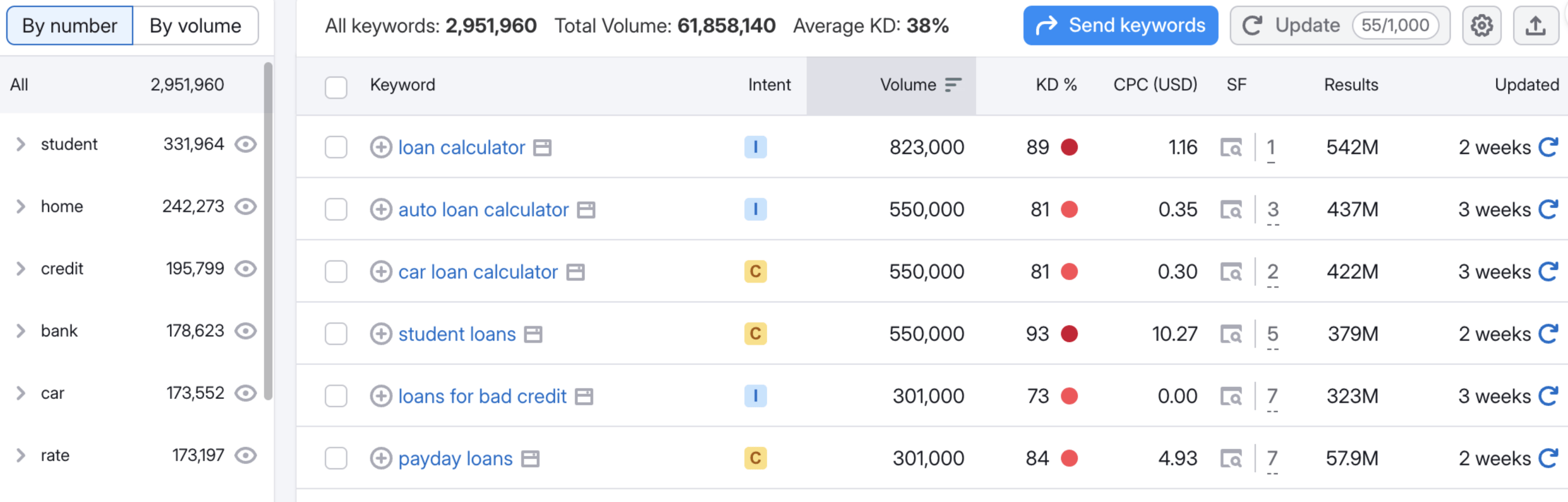
Enter a seed keyword (related to your previous analysis) and your domain. The tool generates a comprehensive list of keyword variations. A key column here is Intent, which classifies each keyword as Informational, Commercial, Transactional, or Navigational. This is where you tailor your content strategy:
- For Informational keywords (the "discovery" stage), attract users with blog posts, guides, and educational content.
- For Commercial keywords (the "evaluation" stage), comparison articles, best-of lists, and detailed reviews are most effective in guiding users toward a decision on your site.
- For Transactional keywords (the "decision" stage), direct them to optimized product pages, category pages, or landing pages with clear calls to action.
How to Operationalize Your Keywords
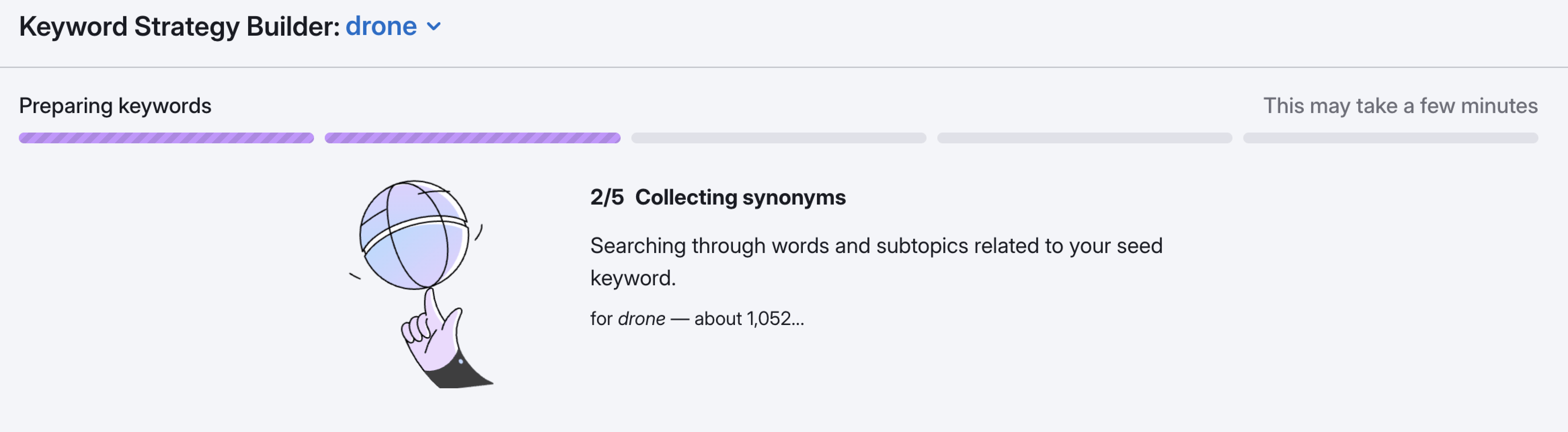
Having a list of keywords, and understanding their intent, is only half the battle. To achieve rankings, you must create content that satisfies that specific search intent—this is a common pitfall for many.
You might then ask: should this keyword be targeted with a blog post, a landing page, or a product page? While SEMrush offers a "Keyword Strategy Builder" that uses AI to suggest content structures based on your keywords, it's often better used as a source of inspiration rather than a direct blueprint.
Relying too heavily on AI-generated structures risks creating content that feels thin or unoriginal. A more robust approach is to analyze how your top competitors are addressing the same search intent for those keywords and then create something demonstrably better or more comprehensive.
SEO Health Audits: Technical & On-Page Optimization
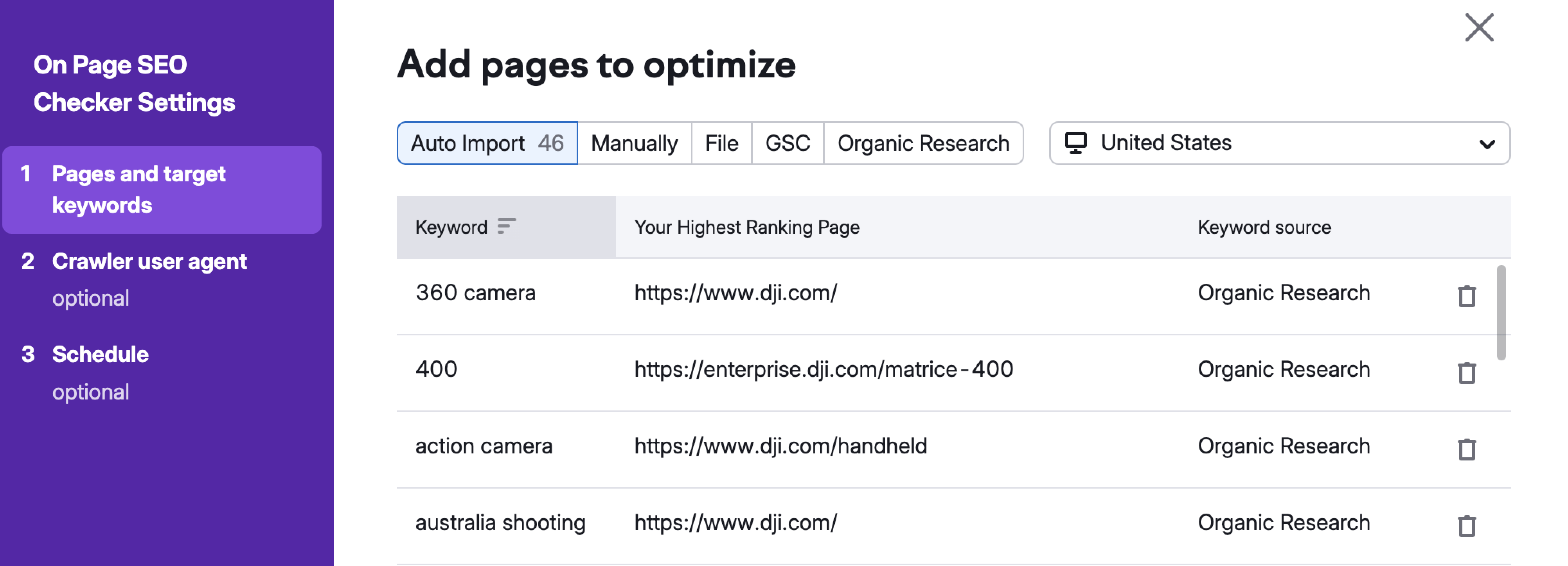
SEMrush provides two powerful audit features to diagnose and fix site health issues:
-
Technical SEO Audit
- Analyzes site loading speed and performance.
- Checks for mobile-friendliness and usability issues.
- Identifies crawling and indexing errors.
- Provides recommendations for site structure optimization.
-
On-Page SEO Checker
- Evaluates the optimization of title tags and meta descriptions.
- Checks for missing or poorly optimized image ALT attributes.
- Analyzes internal linking structure for relevance and flow.
- Provides specific recommendations for individual pages based on target keywords.
It's worth noting that many of these technical and on-page checks can also be performed effectively by defining clear prompts for advanced AI coding tools like Claude Code, offering an alternative workflow for some users.
Backlink Analysis: Building Domain Authority
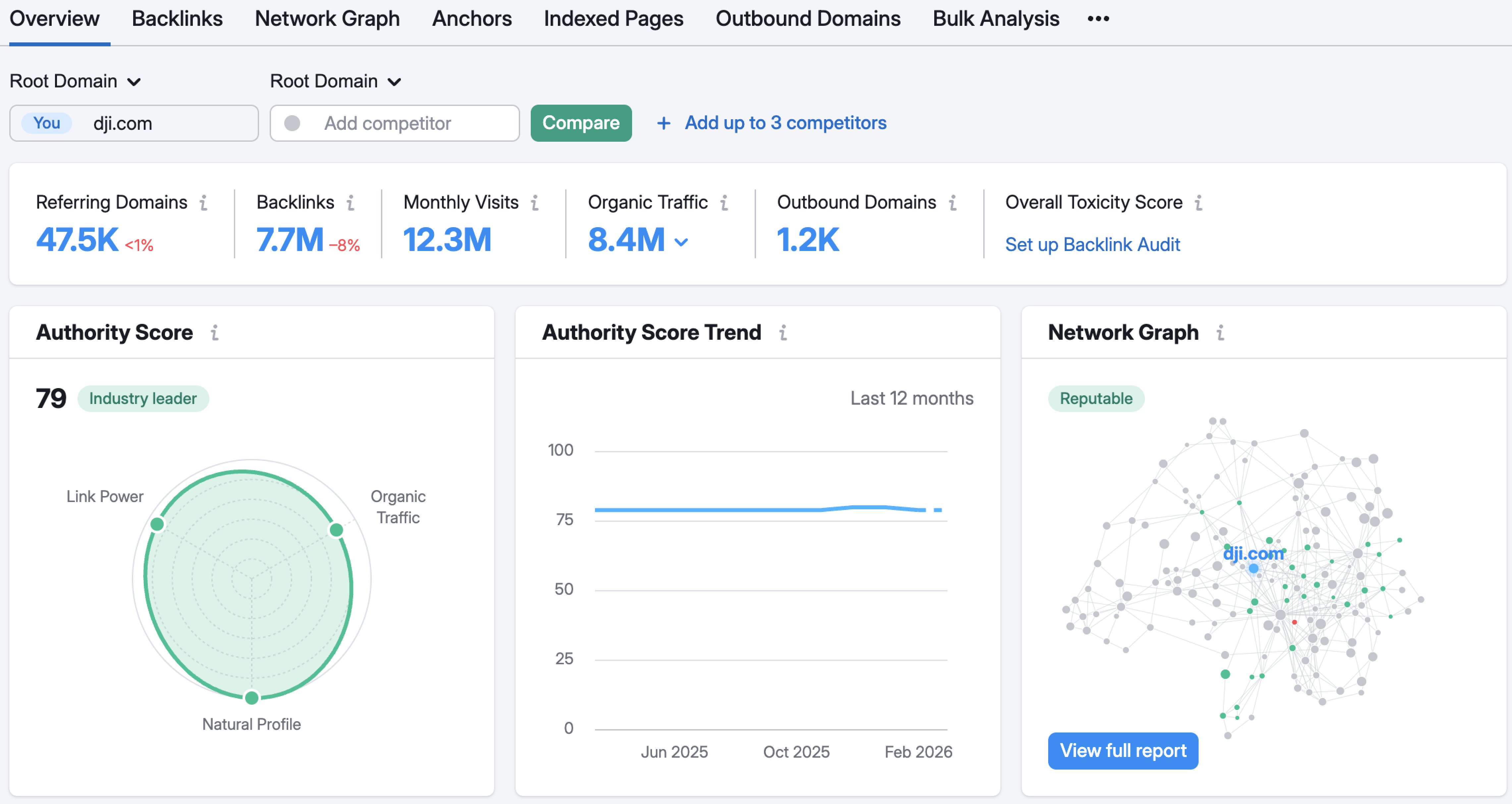
After solidifying your technical and on-page SEO, your site should be healthy and content-rich. However, competing for top rankings requires building authority. This is the primary role of backlinks. A higher number of quality backlinks generally signals greater trustworthiness to search engines like Google, making link building a core ranking factor.
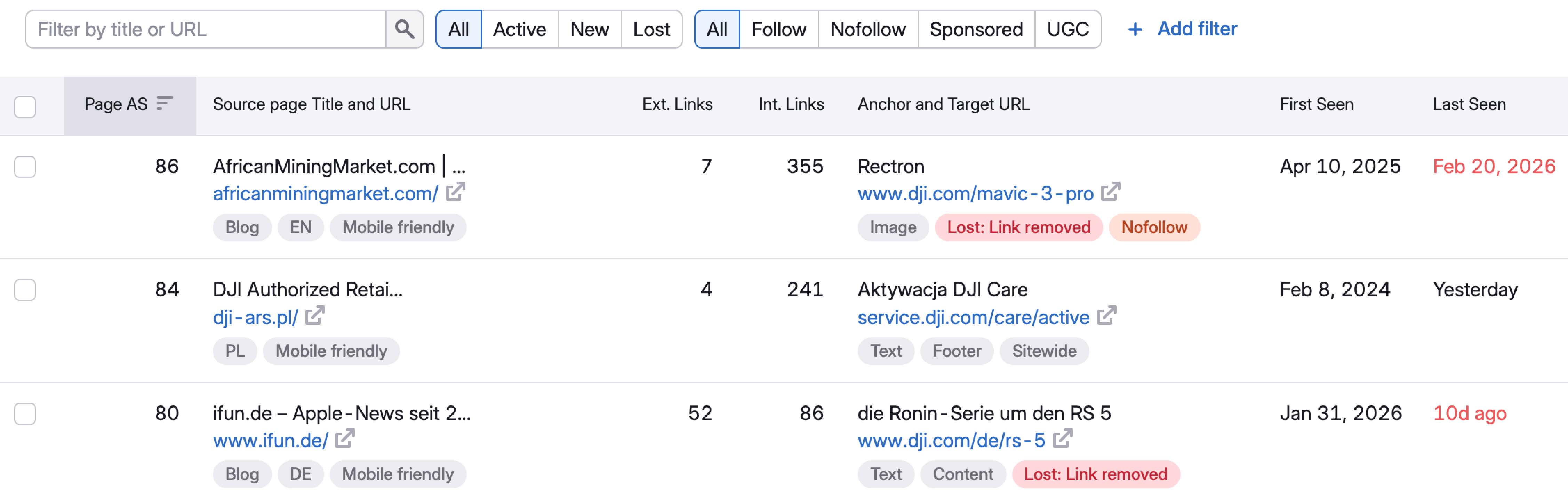
A backlink is simply a link from another website to a page on yours. SEMrush's Backlink Analytics tool is essential for this.
Enter the domain you want to analyze (your own or a competitor's). Navigate to the "Backlinks" report and filter by "Active" to see currently existing links. You can often export this list. A practical tactic is to analyze competitor backlinks—if a site links to them, it might be a potential target for you as well.
One limitation within SEMrush's core backlink tool is the lack of sorting backlinks by the estimated traffic they drive. This feature, available in tools like Similarweb, helps prioritize link-building efforts toward sites that can potentially send the most valuable referral traffic.
Conclusion
SEMrush is an incredibly powerful suite of SEO tools, but mastery of the tools alone doesn't guarantee success. True effectiveness comes from the strategy behind their use. The key takeaways are:
- Prioritize User Intent:: Use the tools to understand why someone searches and create content that genuinely meets that need.
- Learn, Don't Copy: Analyze competitors to understand their strengths, but use those insights to build a unique and superior value proposition for your audience.
- Balance Foundation & Authority: Technical excellence and high-quality content are the essential foundation, but building authority through backlinks is what drives top-tier rankings.
- Commit to the Long Game: SEO is not a one-time setup. Continuous monitoring, analysis, and adaptation are required to maintain and improve your competitive edge.
By internalizing these principles and applying the core functions outlined here, you can leverage SEMrush to build a systematic, data-driven SEO program that secures a dominant position in search results.